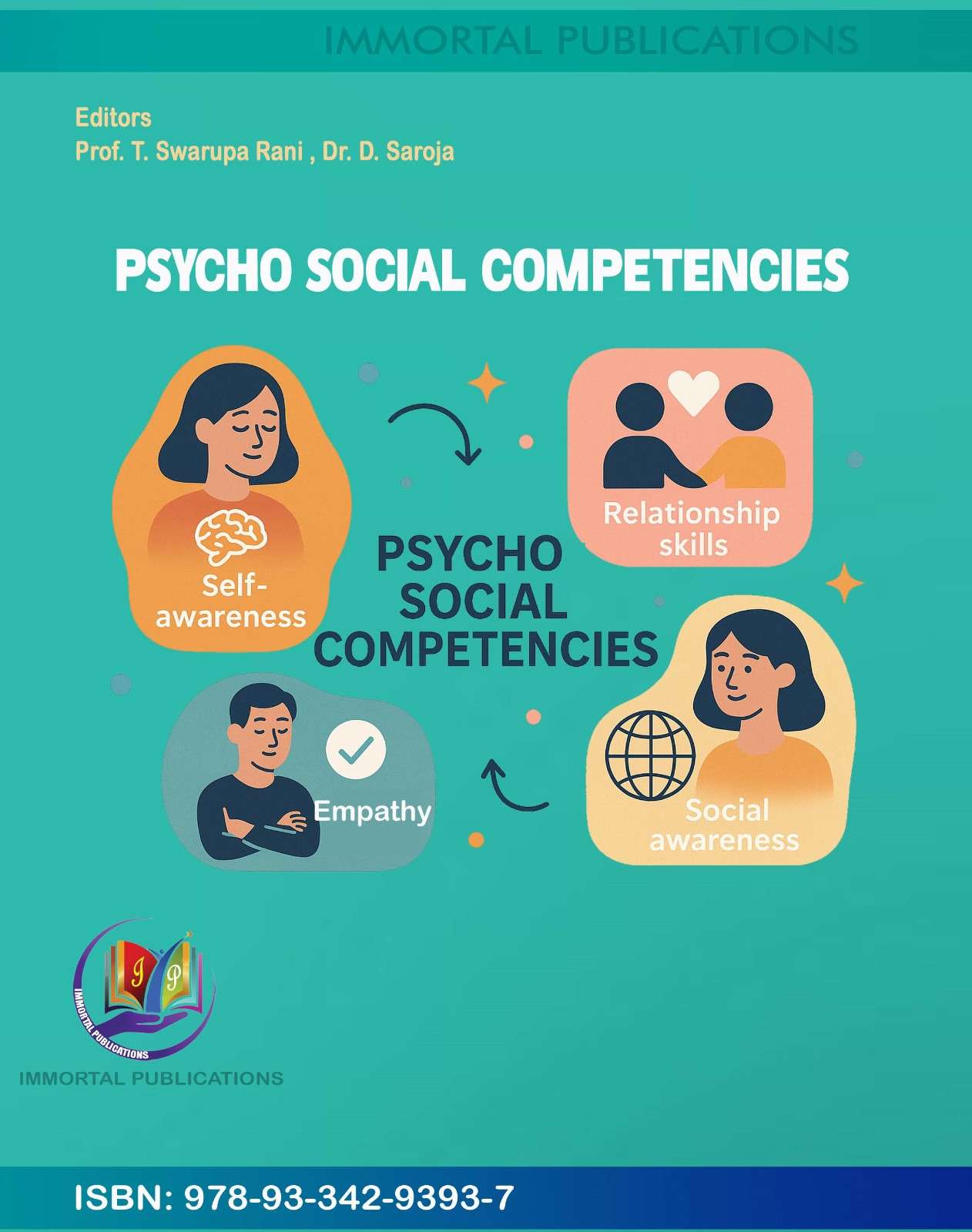

Description
Book details
It gives us great pleasure to present this volume, a curated compilation of scholarly papers on Psychosocial Competencies for Global Youth, This is a significant initiative by St. Joseph’s College of Education and GCPA aimed at fostering holistic development and well-being among young people across diverse cultural and socio-economic contexts. This compilation represents the collective wisdom, research insights, and practical frameworks shared by experts, scholars, practitioners, and youth leaders around the world. The society always needs psychosocially competent individuals who can function effectively in all life situations, and contribute meaningfully to the society. Adapting to a world characterized by globalization, mutual interdependency among nations, fast-changing technology, culturally diverse global workplaces, and changing market-place demand for the acquisition of competencies that empower today’s individuals. This rapidly evolving global landscape marked by complex challenges-ranging from mental health issues and digital disruption to social inequality and climate anxiety-strengthening psychosocial competencies has emerged as a vital imperative. Empowering youth with global psychosocial competencies” with a set of skills related to emotional regulations, Self-awareness, critical thinking interpersonal communication, social awareness, ethical reasoning, resilience, and empathy enabling them to navigate complex global issues, build healthy relationships, and thrive in diverse environments, effectively contributing to their societies meaningfully on a wider scale for a more inclusive and sustainable future. These life-enriching competencies are essential not only for personal well-being but also for building inclusive, peaceful, and sustainable societies. So, there is a need to think of essential competencies and skills that 21st century learners need to cultivate to deal with the challenges posed by uncertainties and complexities of present society. This publication consists of 7 chapters on the diverse areas of psychosocial competencies for the global youth. Vibrant ideas of multidisciplinary community of educators, psychologists, researchers, policymakers, and youth development professionals from across the globe were brought together. Their diverse insights evidence based approaches, empirical findings, and innovative practices are captured in the chapters of this volume. This book reflects shared commitment to advancing the discourse and the urgency of integrating psychosocial learning into mainstream. Emphasizes youth development programs, the need for culturally responsive and equity-centred approaches for nurturing psychosocial skills among young people. It suggests strategies to implement psychosocial education across educational systems, community initiatives, and policy domains. This volume seeks to serve as a resource for Teachers, psychologists, scholars, practitioners, and institutions committed to empowering youth through holistic development frameworks. It is our hope that the ideas evidences and conclusions presented herein will inform future research, inspire practical action, and foster meaningful collaboration across borders. We extend our sincere appreciation to all contributors, reviewers, and publishers whose dedication made this conference and subsequent publication possible. We also acknowledge the participating institutions and supporting organizations for their invaluable cooperation and vision. It is our hope that this tretise not only serves as a repository of knowledge but also as a catalyst for further, collaboration, and action to empower the future generation with the psychosocial strengths they need to navigate their lives and shape a better world. Let this tome stand as a testament to our shared commitment towards nurturing resilient, compassionate, and globally competent youth.